
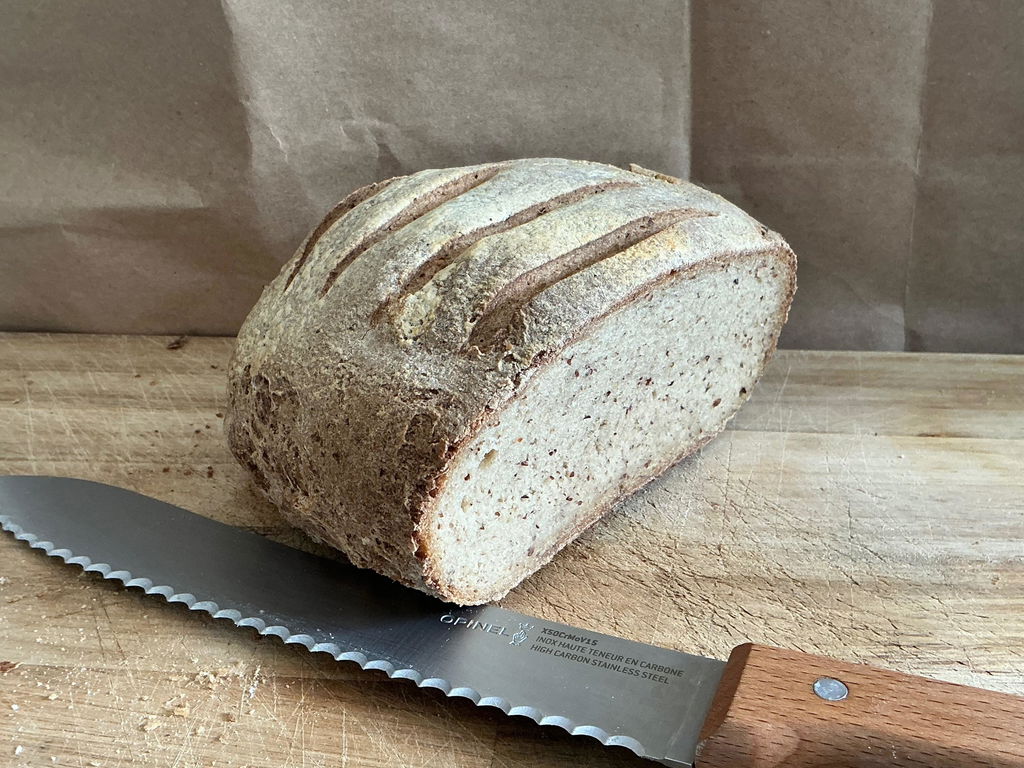
I did find the instructions a little odd, to weigh water? I didn’t have much hope for the bread as I couldn’t get the sourdough starter to bubble, (it was really thick) even though in the heatwave my kitchen has been a constant 24c and I left it 4 days, and kept spitting. Then the dough didn’t rise at all in proving …BUT! The bread tastes really good, it wasn’t the ‘brick I expected. I’m going to order again but need to advice on how to get the starter bubbling.
Hi Caren,
We're glad to hear the bread turned out tasty. We use water by weight, as it is more accurate than using a water measuring jug.
You could add a little more room-temperature water to your starter.
I used the kit as Directed but I did add an extra day of doing the starter to really get it going - it may have been a bit cold before. The bread is delicious, although I think I should have cooked it a little more than 35 minutes but I tapped it and it sound hollow so I thought it would be fine - this was my fault as the directions do say it may need longer. So, I will buy the kit again to check but if you are trying for the first time, give it a bit more time.
Package arrived. Had to pay an extra £3.50 for Royal Mail to deliver as packaged wrong.
Contacted simply bales last week. Not heard back.
Never use again.
We did reply to you and sent you a replacement when the original did not arrive, but it did arrive in the end. So you end up with 2 orders for the price of one.
Great concept but, so far, I am struggling to get the sourdough starter to start! Instructions are not complete (and are too small!) - e.g. does not say to add warm water to the starter or that tap water (with chlorine) may kill the yeast.
I'm waiting and hoping that the starter will spring to life after feeding it over coming hours (or days!)
I am a reasonable cook but found the instructions confusing. When did measuring water by weight become a thing?
When do you combine the two packs for each loaf?
The dough didn't rise at all, should I then have added the additional sachet of flour?
If the instructions were good I would probably order again but will look elsewhere in the future.
Also very short use by date.
Hi Robin, thanks for the feedback. I will look at updating the instructions. I am a one man band so do everything myself and am always looking at ways to improve. The reason for the short use by date is due to the fresh ingredients. Would love to have you reorder, feel free to email me directly on support@simplebake.co.uk